
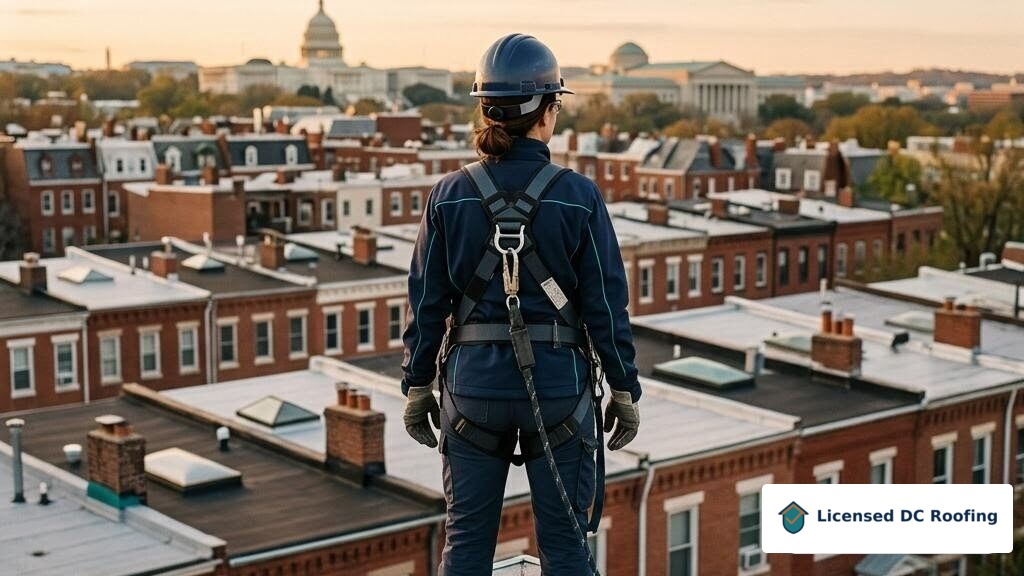
Washington, DC roofing has details that generic advice misses. Early twentieth-century rowhouses often have flat or low-slope roofs, stacked prior repairs, shared parapet walls, coping stones, and party-wall flashing. Water can travel before it appears inside. A careful conversation starts with what you have, what changed, and what is safe to inspect.
What to consider
Materials and details should match the building. EPDM, TPO, modified bitumen, torch-down systems, and coatings each have advantages and limitations. Drainage around interior drains and scuppers matters, and ponding deserves attention. For slate or standing-seam roofs in a historic district, verify the property's current status and guidance before making visible changes.
Weather in the District brings summer thunderstorms, hail, tropical remnants, and freeze-thaw cycling. Photograph conditions from a safe place, protect belongings from interior water, and do not climb a wet or damaged roof. A written scope should explain access, flashing, membranes, deck conditions, cleanup, and any assumptions.
Local planning and next steps
Roof replacement may require a permit through the DC Department of Buildings; confirm current requirements with DOB because the process depends on the project and property. Insurance decisions depend on policy language and facts, so retain dated photos and ask your carrier questions. We can help organize the questions to discuss with a roofing professional.
Common questions
How quickly should I address a roof concern?
Promptly, especially when water is entering or a membrane is exposed. Temporary protection can limit additional damage while a permanent plan is developed.
Can you guarantee an insurance result?
No. Coverage is determined by your policy and carrier. Documentation and a clear scope make the conversation easier.
Frequently asked questions
What should I know about about?
The page explains considerations specific to about. Conditions, access, materials, and the property's existing construction should be evaluated before work is selected.
How should a about inspection begin?
Start with a safe description of the symptom and the building. A professional can document roof edges, drainage, penetrations, adjacent walls, and any limits on access without assuming a cause.
What information should I gather about about?
Keep dated photographs from safe locations, prior scopes or invoices, leak dates, and notes about access. These records help a roofing professional ask better questions.
Can the about page promise a specific result?
No. A web page cannot inspect concealed conditions or decide permit, insurance, or repair outcomes. Request a written scope that states assumptions and exclusions.
Are permits relevant to about?
Possibly. Requirements depend on the property and proposed work, so confirm current requirements with the DC Department of Buildings and any applicable historic-review authority.
How should I handle an urgent about concern?
Protect people and belongings from a safe location, document visible conditions, and seek prompt professional advice. Do not climb a wet, icy, unstable, or visibly damaged roof.
What should a proposal for about include?
Look for the observed condition, proposed work, materials, flashing and drainage details, access and weather protection, concealed-condition allowances, cleanup, and exclusions.