
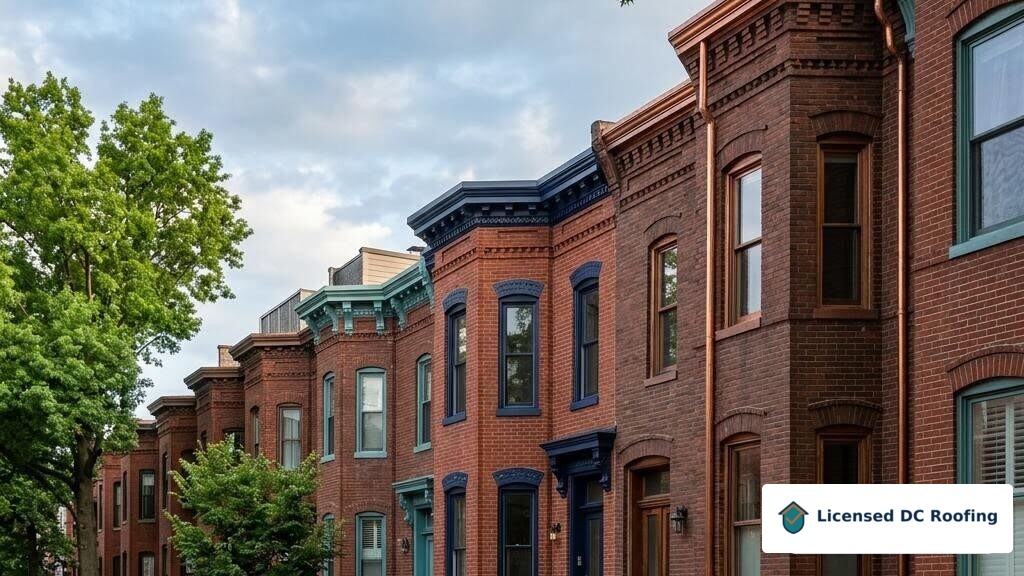
Bloomingdale is distinguished by its stunning, uniform blocks of Victorian-style rowhouses, characterized by ornate brickwork, prominent front turrets, and hidden flat roofs. This striking Ward 5 architecture requires a highly specialized approach to roof maintenance and replacement, balancing modern waterproofing with historic aesthetics.
The primary roofing system for a Bloomingdale rowhouse is typically a low-slope or flat membrane, such as EPDM or modified bitumen, situated out of sight behind a decorative front facade or parapet. Managing drainage on these flat expanses is the core challenge. Water must be efficiently routed to rear scuppers or internal drains. Over time, buildings settle, and roofs can develop depressions that hold water. Installing tapered insulation systems to guarantee positive water flow off the rear of the property is a standard best practice during a roof replacement in this neighborhood.
The interface between the hidden flat roof and the visible historic elements is critical. The metal flashings that connect the flat membrane to the rear of the front turrets and the shared party walls must be executed flawlessly. The decorative cornices and slate-clad mansards facing the street also require careful preservation. Repairing the built-in gutters often found behind these cornices demands custom metalwork to ensure that water is shed safely without damaging the intricate masonry that defines Bloomingdale's character.
Common questions about Bloomingdale roofing
Do you handle historic district requirements in Bloomingdale?
Yes. Any visible changes in historic overlays require strict adherence to local architectural guidelines, ensuring your roof replacement complies fully with DC regulations.
How quickly can you address an active leak in Ward 5?
We prioritize active leaks and storm damage. Call us immediately so we can help arrange temporary protection to prevent interior damage while a permanent scope of work is developed.
What roofing materials are best for Bloomingdale?
The optimal material depends entirely on your specific property style, whether it is a historic flat structure or a modern addition. We assess your building's slope, structure, and neighborhood guidelines to recommend the best fit.
Frequently asked questions
What should I know about bloomingdale?
The page explains considerations specific to bloomingdale. Conditions, access, materials, and the property's existing construction should be evaluated before work is selected.
How should a bloomingdale inspection begin?
Start with a safe description of the symptom and the building. A professional can document roof edges, drainage, penetrations, adjacent walls, and any limits on access without assuming a cause.
What information should I gather about bloomingdale?
Keep dated photographs from safe locations, prior scopes or invoices, leak dates, and notes about access. These records help a roofing professional ask better questions.
Can the bloomingdale page promise a specific result?
No. A web page cannot inspect concealed conditions or decide permit, insurance, or repair outcomes. Request a written scope that states assumptions and exclusions.
Are permits relevant to bloomingdale?
Possibly. Requirements depend on the property and proposed work, so confirm current requirements with the DC Department of Buildings and any applicable historic-review authority.
How should I handle an urgent bloomingdale concern?
Protect people and belongings from a safe location, document visible conditions, and seek prompt professional advice. Do not climb a wet, icy, unstable, or visibly damaged roof.
What should a proposal for bloomingdale include?
Look for the observed condition, proposed work, materials, flashing and drainage details, access and weather protection, concealed-condition allowances, cleanup, and exclusions.