
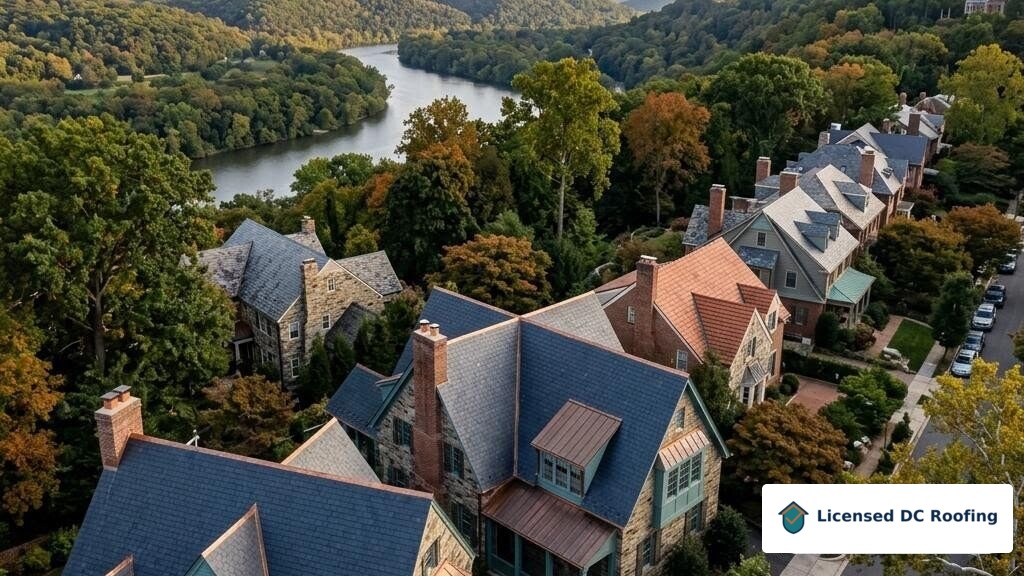
The Palisades neighborhood, running along the Potomac River, is known for its quiet, tree-lined streets and diverse collection of single-family homes, ranging from charming bungalows to expansive custom builds. The varying topography and proximity to the river can influence local microclimates, subjecting roofs to unique wind patterns and humidity levels.
Roofing in the Palisades often involves steep-slope systems utilizing architectural asphalt, synthetic slate, or standing seam metal. Given the standalone nature of the homes in Ward 3, protecting the roof edges from wind damage is a priority. Metal drip edges installed along the eaves and rakes are necessary to direct water into the gutters and prevent wind-driven rain from penetrating beneath the roof deck.
Additionally, the mature trees prevalent in the Palisades mean that moss and algae growth can be a concern on heavily shaded roof planes. Choosing roofing materials with algae-resistant copper or zinc granules can help maintain the roof's appearance over time. When dealing with older bungalows, the integration of new roofing with existing, often undersized, gutter systems requires careful planning. Upgrading to larger, seamless aluminum or copper gutters is frequently necessary to handle the volume of water shed during intense summer downpours, ensuring that the foundation and basement of the property remain dry.
Common questions about Palisades roofing
Do you handle historic district requirements in Palisades?
Yes. Any visible changes in historic overlays require strict adherence to local architectural guidelines, ensuring your roof replacement complies fully with DC regulations.
How quickly can you address an active leak in Ward 3?
We prioritize active leaks and storm damage. Call us immediately so we can help arrange temporary protection to prevent interior damage while a permanent scope of work is developed.
What roofing materials are best for Palisades?
The optimal material depends entirely on your specific property style, whether it is a historic single-family structure or a modern addition. We assess your building's slope, structure, and neighborhood guidelines to recommend the best fit.
Frequently asked questions
What should I know about palisades?
The page explains considerations specific to palisades. Conditions, access, materials, and the property's existing construction should be evaluated before work is selected.
How should a palisades inspection begin?
Start with a safe description of the symptom and the building. A professional can document roof edges, drainage, penetrations, adjacent walls, and any limits on access without assuming a cause.
What information should I gather about palisades?
Keep dated photographs from safe locations, prior scopes or invoices, leak dates, and notes about access. These records help a roofing professional ask better questions.
Can the palisades page promise a specific result?
No. A web page cannot inspect concealed conditions or decide permit, insurance, or repair outcomes. Request a written scope that states assumptions and exclusions.
Are permits relevant to palisades?
Possibly. Requirements depend on the property and proposed work, so confirm current requirements with the DC Department of Buildings and any applicable historic-review authority.
How should I handle an urgent palisades concern?
Protect people and belongings from a safe location, document visible conditions, and seek prompt professional advice. Do not climb a wet, icy, unstable, or visibly damaged roof.
What should a proposal for palisades include?
Look for the observed condition, proposed work, materials, flashing and drainage details, access and weather protection, concealed-condition allowances, cleanup, and exclusions.