
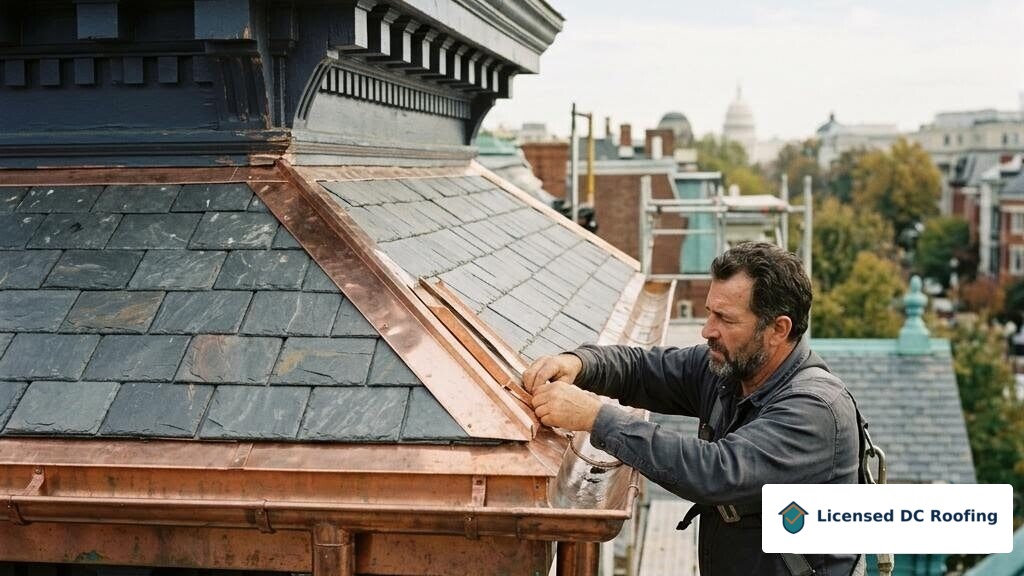
Roofing in a DC historic district requires attention to both water management and visible character. Rooflines, slate, metal, cornices, dormers, chimneys, and parapets may contribute to a building’s appearance, while much of the waterproofing is hidden. Historic status should be verified for the specific property; do not assume every old building is regulated or that every repair is exempt.
Plan preservation and performance together
Document existing materials and details before removal. Salvageable slate or metal may need specialist handling, and replacement flashings must protect masonry without creating a new visual mismatch. On flat rowhouses, membrane and coping work should respect visible edges, party walls, and drainage. A modern substitute should be evaluated for compatibility, not selected by appearance alone.
Coordinate approvals and scope
Confirm current guidance with the relevant DC agencies before changing visible materials, roof form, dormers, or cornices. Ask for drawings, product information, photographs, and a repair-versus-replace explanation. Maintain temporary protection while approvals are being considered, and do not promise an approval outcome.
Local planning and next steps
Document conditions from a safe location and request a written scope that identifies access, materials, flashing, drainage, concealed conditions, cleanup, and exclusions. Confirm current DC Department of Buildings requirements when the work changes the roof assembly or structure. Coverage questions belong with the insurance carrier and depend on policy language.
Common questions
What should I ask first?
Ask what was observed, what remains uncertain, which action is urgent, and how the proposed work addresses water entry and surrounding details.
Can a general article replace an inspection?
No. Local guidance helps you prepare, but roof condition and safe access require a qualified on-site assessment.
Roofing in a DC historic district requires attention to both water management and visible character. Rooflines, slate, metal, cornices, dormers, chimneys, and parapets may contribute to a building’s appearance, while much of the waterproofing is hidden. Historic status should be verified for the specific property; do not assume every old building is regulated or that every repair is exempt.
Plan preservation and performance together
Document existing materials and details before removal. Salvageable slate or metal may need specialist handling, and replacement flashings must protect masonry without creating a new visual mismatch. On flat rowhouses, membrane and coping work should respect visible edges, party walls, and drainage. A modern substitute should be evaluated for compatibility, not selected by appearance alone.
Coordinate approvals and scope
Confirm current guidance with the relevant DC agencies before changing visible materials, roof form, dormers, or cornices. Ask for drawings, product information, photographs, and a repair-versus-replace explanation. Maintain temporary protection while approvals are being considered, and do not promise an approval outcome.
Local planning and next steps
Document conditions from a safe location and request a written scope that identifies access, materials, flashing, drainage, concealed conditions, cleanup, and exclusions. Confirm current DC Department of Buildings requirements when the work changes the roof assembly or structure. Coverage questions belong with the insurance carrier and depend on policy language.
Common questions
What should I ask first? in this article
Ask what was observed, what remains uncertain, which action is urgent, and how the proposed work addresses water entry and surrounding details.
Can a general article replace an inspection? in this article
No. Local guidance helps you prepare, but roof condition and safe access require a qualified on-site assessment.
Frequently asked questions
What should I know about historic district roofing dc?
The page explains considerations specific to historic district roofing dc. Conditions, access, materials, and the property's existing construction should be evaluated before work is selected.
How should a historic district roofing dc inspection begin?
Start with a safe description of the symptom and the building. A professional can document roof edges, drainage, penetrations, adjacent walls, and any limits on access without assuming a cause.
What information should I gather about historic district roofing dc?
Keep dated photographs from safe locations, prior scopes or invoices, leak dates, and notes about access. These records help a roofing professional ask better questions.
Can the historic district roofing dc page promise a specific result?
No. A web page cannot inspect concealed conditions or decide permit, insurance, or repair outcomes. Request a written scope that states assumptions and exclusions.
Are permits relevant to historic district roofing dc?
Possibly. Requirements depend on the property and proposed work, so confirm current requirements with the DC Department of Buildings and any applicable historic-review authority.
How should I handle an urgent historic district roofing dc concern?
Protect people and belongings from a safe location, document visible conditions, and seek prompt professional advice. Do not climb a wet, icy, unstable, or visibly damaged roof.
What should a proposal for historic district roofing dc include?
Look for the observed condition, proposed work, materials, flashing and drainage details, access and weather protection, concealed-condition allowances, cleanup, and exclusions.