
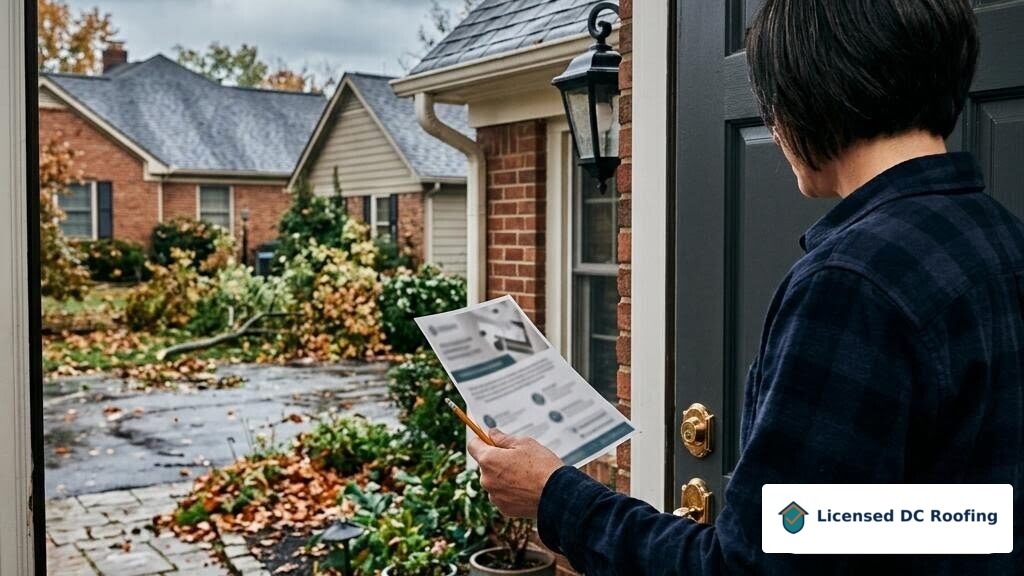
Storm chasers often arrive in neighborhoods soon after hail or wind and offer a fast inspection. Some may be legitimate, but urgency and a free inspection should not replace verification. DC owners have time to document, compare scopes, and contact a roofer themselves unless an active leak requires immediate safe mitigation.
Protect your decision
Ask for identification, legal business name, local contact information, insurance documentation, and a written diagnosis. Do not sign an assignment or let anyone interpret your insurance policy for you without understanding the document. Be wary of promises that insurance will pay, pressure to sign today, or a contractor who cannot explain why replacement is needed.
Compare independent evidence
Photograph the roof from safe places, request close-up images, and obtain another opinion when the diagnosis is unclear. Compare measured area, materials, flashing, ventilation, deck allowances, cleanup, payment schedule, and exclusions. Never provide access to a locked home or attic without confirming who is present.
Local planning and next steps
Document conditions from a safe location and request a written scope that identifies access, materials, flashing, drainage, concealed conditions, cleanup, and exclusions. Confirm current DC Department of Buildings requirements when the work changes the roof assembly or structure. Coverage questions belong with the insurance carrier and depend on policy language.
Common questions
What should I ask first?
Ask what was observed, what remains uncertain, which action is urgent, and how the proposed work addresses water entry and surrounding details.
Can a general article replace an inspection?
No. Local guidance helps you prepare, but roof condition and safe access require a qualified on-site assessment.
Storm chasers often arrive in neighborhoods soon after hail or wind and offer a fast inspection. Some may be legitimate, but urgency and a free inspection should not replace verification. DC owners have time to document, compare scopes, and contact a roofer themselves unless an active leak requires immediate safe mitigation.
Protect your decision
Ask for identification, legal business name, local contact information, insurance documentation, and a written diagnosis. Do not sign an assignment or let anyone interpret your insurance policy for you without understanding the document. Be wary of promises that insurance will pay, pressure to sign today, or a contractor who cannot explain why replacement is needed.
Compare independent evidence
Photograph the roof from safe places, request close-up images, and obtain another opinion when the diagnosis is unclear. Compare measured area, materials, flashing, ventilation, deck allowances, cleanup, payment schedule, and exclusions. Never provide access to a locked home or attic without confirming who is present.
Local planning and next steps
Document conditions from a safe location and request a written scope that identifies access, materials, flashing, drainage, concealed conditions, cleanup, and exclusions. Confirm current DC Department of Buildings requirements when the work changes the roof assembly or structure. Coverage questions belong with the insurance carrier and depend on policy language.
Common questions
What should I ask first? in this article
Ask what was observed, what remains uncertain, which action is urgent, and how the proposed work addresses water entry and surrounding details.
Can a general article replace an inspection? in this article
No. Local guidance helps you prepare, but roof condition and safe access require a qualified on-site assessment.
Frequently asked questions
What should I know about storm chaser roofers dc?
The page explains considerations specific to storm chaser roofers dc. Conditions, access, materials, and the property's existing construction should be evaluated before work is selected.
How should a storm chaser roofers dc inspection begin?
Start with a safe description of the symptom and the building. A professional can document roof edges, drainage, penetrations, adjacent walls, and any limits on access without assuming a cause.
What information should I gather about storm chaser roofers dc?
Keep dated photographs from safe locations, prior scopes or invoices, leak dates, and notes about access. These records help a roofing professional ask better questions.
Can the storm chaser roofers dc page promise a specific result?
No. A web page cannot inspect concealed conditions or decide permit, insurance, or repair outcomes. Request a written scope that states assumptions and exclusions.
Are permits relevant to storm chaser roofers dc?
Possibly. Requirements depend on the property and proposed work, so confirm current requirements with the DC Department of Buildings and any applicable historic-review authority.
How should I handle an urgent storm chaser roofers dc concern?
Protect people and belongings from a safe location, document visible conditions, and seek prompt professional advice. Do not climb a wet, icy, unstable, or visibly damaged roof.
What should a proposal for storm chaser roofers dc include?
Look for the observed condition, proposed work, materials, flashing and drainage details, access and weather protection, concealed-condition allowances, cleanup, and exclusions.