
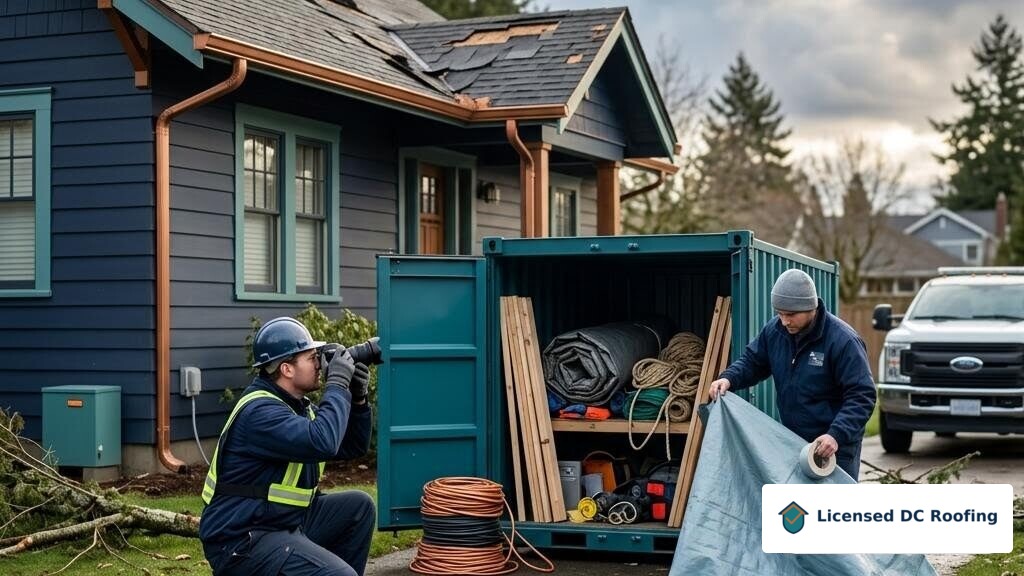
After a DC thunderstorm, prioritize people and electrical safety before the roof. Wind, hail, fallen branches, and driven rain can expose membrane, dislodge shingles, or damage parapets. A small opening can admit substantial water, but a homeowner climbing a wet roof can create a second emergency.
First actions indoors
Move belongings away from drips, place containers, and isolate electricity only when it can be done safely. Photograph water entry, ceilings, damaged contents, and visible exterior conditions from the ground. Record when the storm occurred and notify the property manager or neighbors when shared walls or utilities may be involved.
Arrange safe temporary protection
A roofer can assess whether a tarp or other temporary measure is safe and appropriate. Do not nail through a membrane yourself, walk on loose shingles, or remove a branch that is touching power lines. Ask for a written record of emergency work and the permanent recommendations; temporary protection is not the same as a completed repair.
Local planning and next steps
Document conditions from a safe location and request a written scope that identifies access, materials, flashing, drainage, concealed conditions, cleanup, and exclusions. Confirm current DC Department of Buildings requirements when the work changes the roof assembly or structure. Coverage questions belong with the insurance carrier and depend on policy language.
Common questions
What should I ask first?
Ask what was observed, what remains uncertain, which action is urgent, and how the proposed work addresses water entry and surrounding details.
Can a general article replace an inspection?
No. Local guidance helps you prepare, but roof condition and safe access require a qualified on-site assessment.
After a DC thunderstorm, prioritize people and electrical safety before the roof. Wind, hail, fallen branches, and driven rain can expose membrane, dislodge shingles, or damage parapets. A small opening can admit substantial water, but a homeowner climbing a wet roof can create a second emergency.
First actions indoors
Move belongings away from drips, place containers, and isolate electricity only when it can be done safely. Photograph water entry, ceilings, damaged contents, and visible exterior conditions from the ground. Record when the storm occurred and notify the property manager or neighbors when shared walls or utilities may be involved.
Arrange safe temporary protection
A roofer can assess whether a tarp or other temporary measure is safe and appropriate. Do not nail through a membrane yourself, walk on loose shingles, or remove a branch that is touching power lines. Ask for a written record of emergency work and the permanent recommendations; temporary protection is not the same as a completed repair.
Local planning and next steps
Document conditions from a safe location and request a written scope that identifies access, materials, flashing, drainage, concealed conditions, cleanup, and exclusions. Confirm current DC Department of Buildings requirements when the work changes the roof assembly or structure. Coverage questions belong with the insurance carrier and depend on policy language.
Common questions
What should I ask first? in this article
Ask what was observed, what remains uncertain, which action is urgent, and how the proposed work addresses water entry and surrounding details.
Can a general article replace an inspection? in this article
No. Local guidance helps you prepare, but roof condition and safe access require a qualified on-site assessment.
Frequently asked questions
What should I know about storm damage first 24 hours dc?
The page explains considerations specific to storm damage first 24 hours dc. Conditions, access, materials, and the property's existing construction should be evaluated before work is selected.
How should a storm damage first 24 hours dc inspection begin?
Start with a safe description of the symptom and the building. A professional can document roof edges, drainage, penetrations, adjacent walls, and any limits on access without assuming a cause.
What information should I gather about storm damage first 24 hours dc?
Keep dated photographs from safe locations, prior scopes or invoices, leak dates, and notes about access. These records help a roofing professional ask better questions.
Can the storm damage first 24 hours dc page promise a specific result?
No. A web page cannot inspect concealed conditions or decide permit, insurance, or repair outcomes. Request a written scope that states assumptions and exclusions.
Are permits relevant to storm damage first 24 hours dc?
Possibly. Requirements depend on the property and proposed work, so confirm current requirements with the DC Department of Buildings and any applicable historic-review authority.
How should I handle an urgent storm damage first 24 hours dc concern?
Protect people and belongings from a safe location, document visible conditions, and seek prompt professional advice. Do not climb a wet, icy, unstable, or visibly damaged roof.
What should a proposal for storm damage first 24 hours dc include?
Look for the observed condition, proposed work, materials, flashing and drainage details, access and weather protection, concealed-condition allowances, cleanup, and exclusions.